Start With a Clean Base
A well-layered bed is mostly about order. Before anything pretty goes on top, the base has to be smooth: a fitted sheet pulled tight at the corners, no wrinkles trapped underneath, and a duvet cover given a good shake so the fill sits evenly inside. If you have ever ended the day fighting your bedding, it is almost always a base problem rather than a styling problem.
Layer One: The Duvet
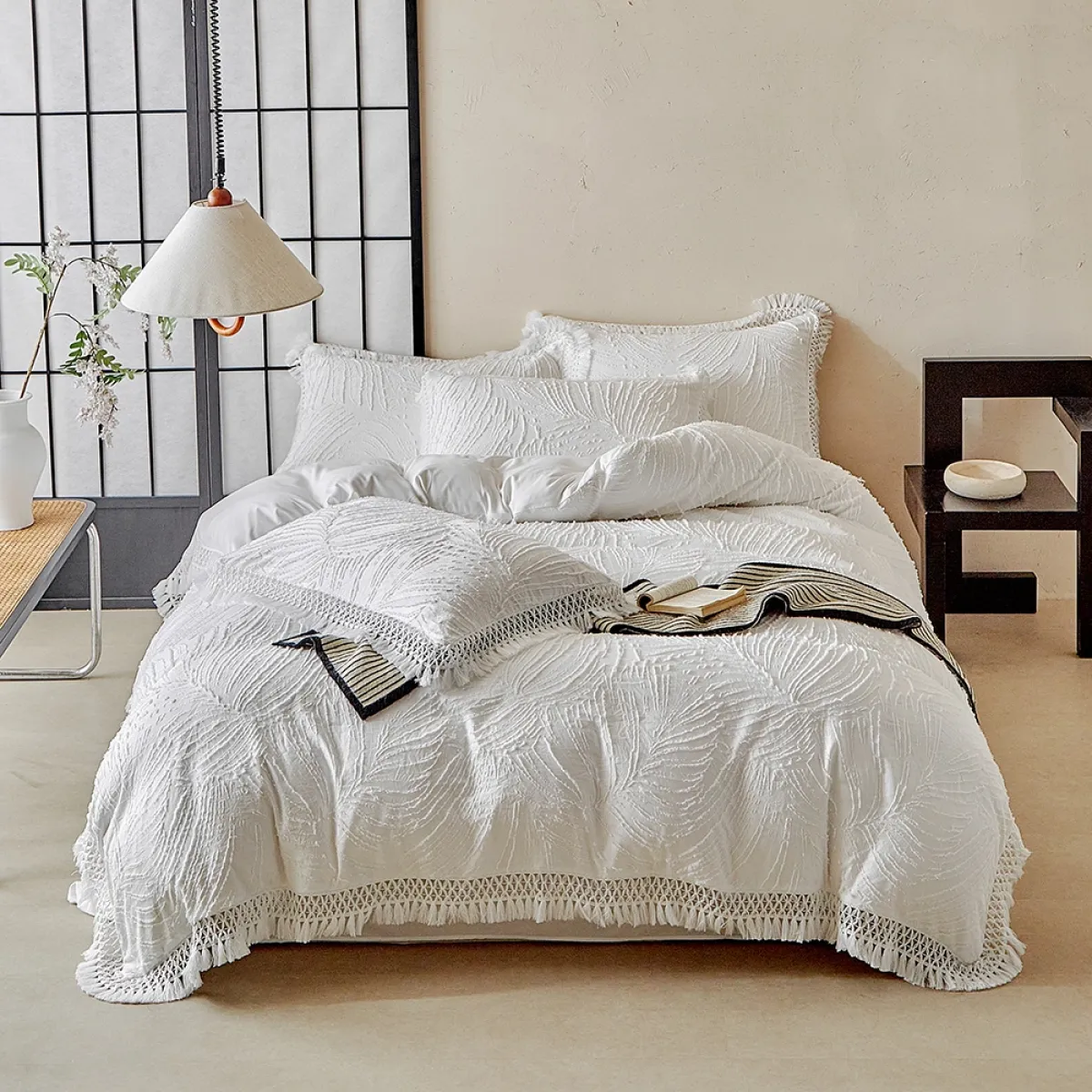
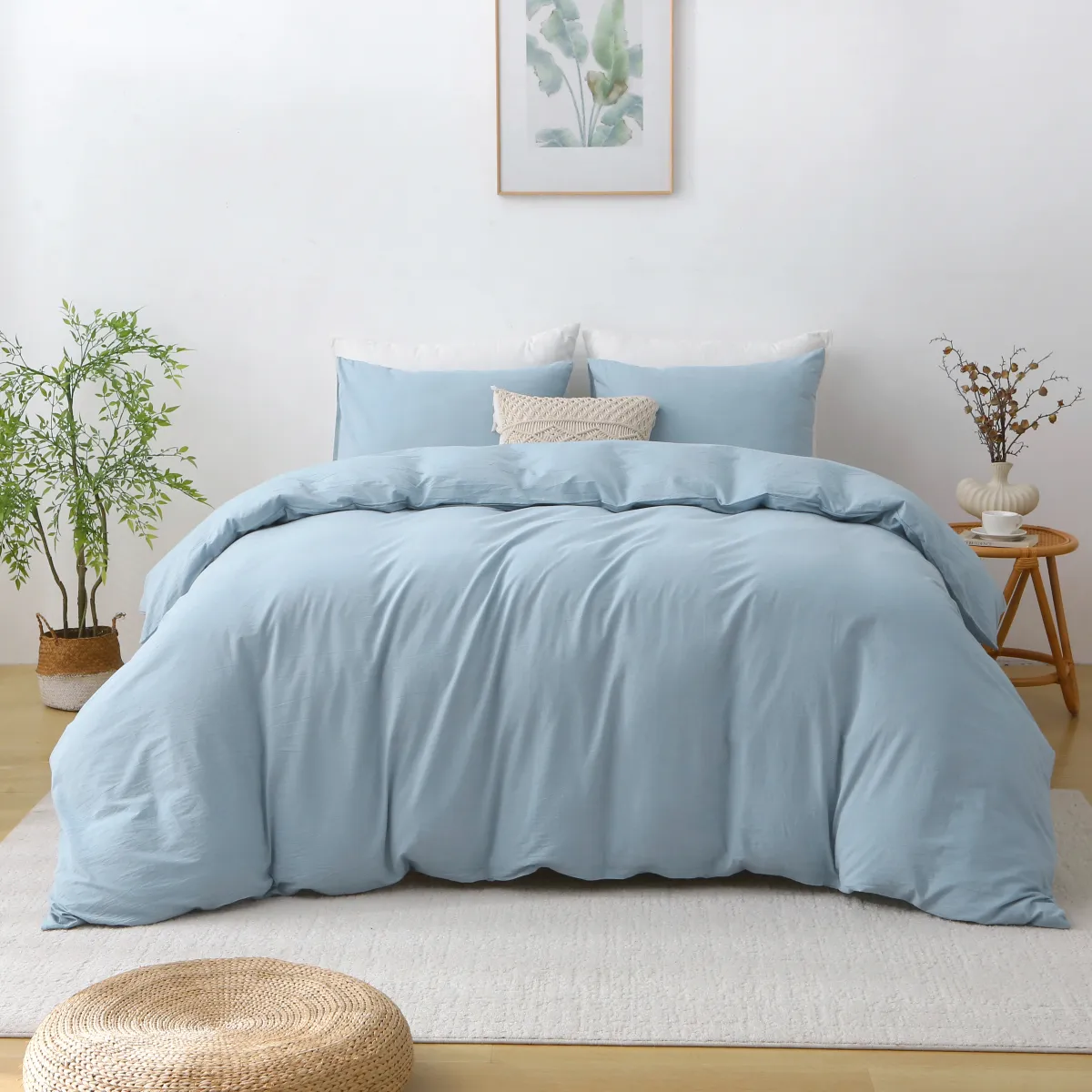
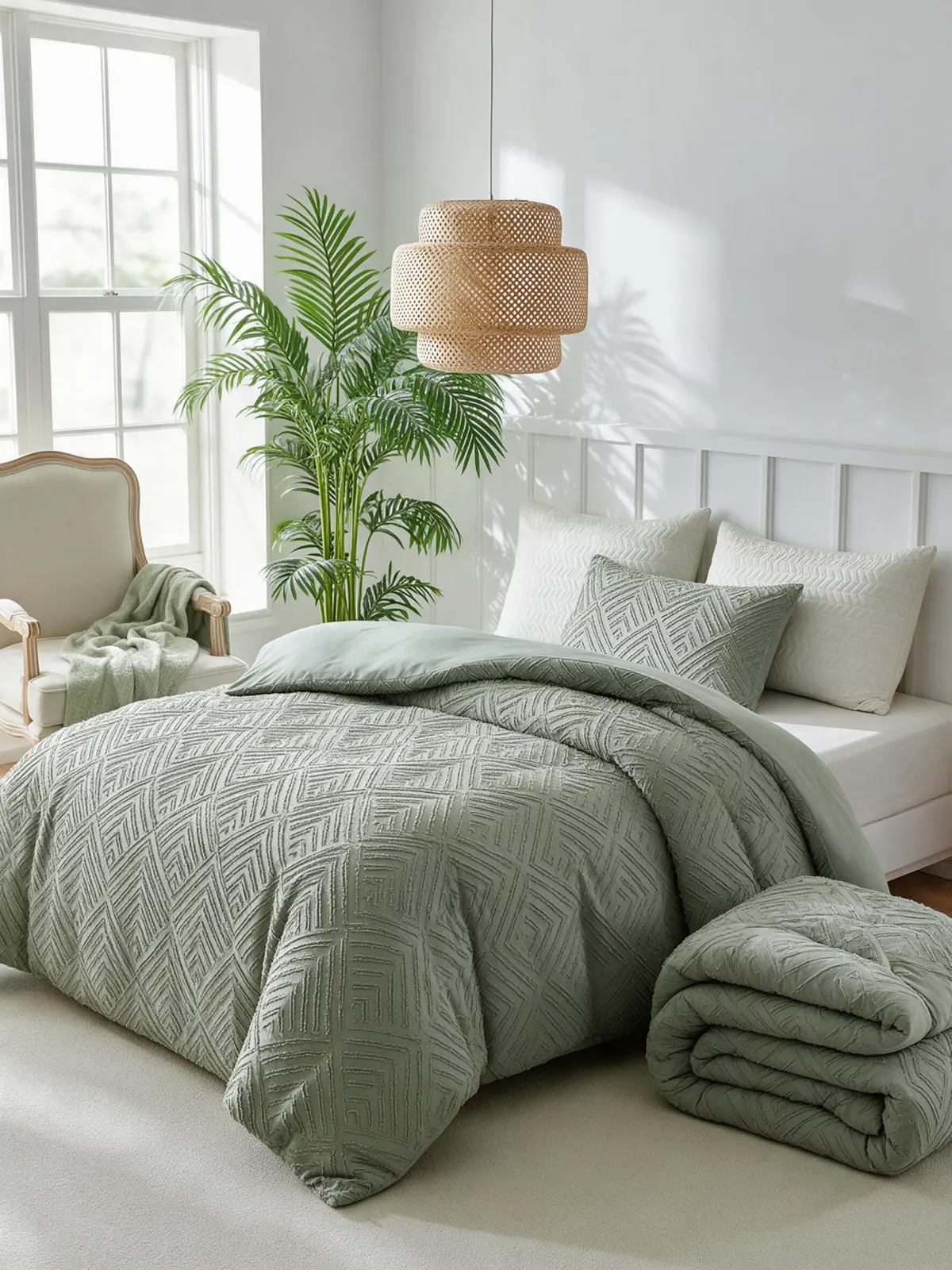
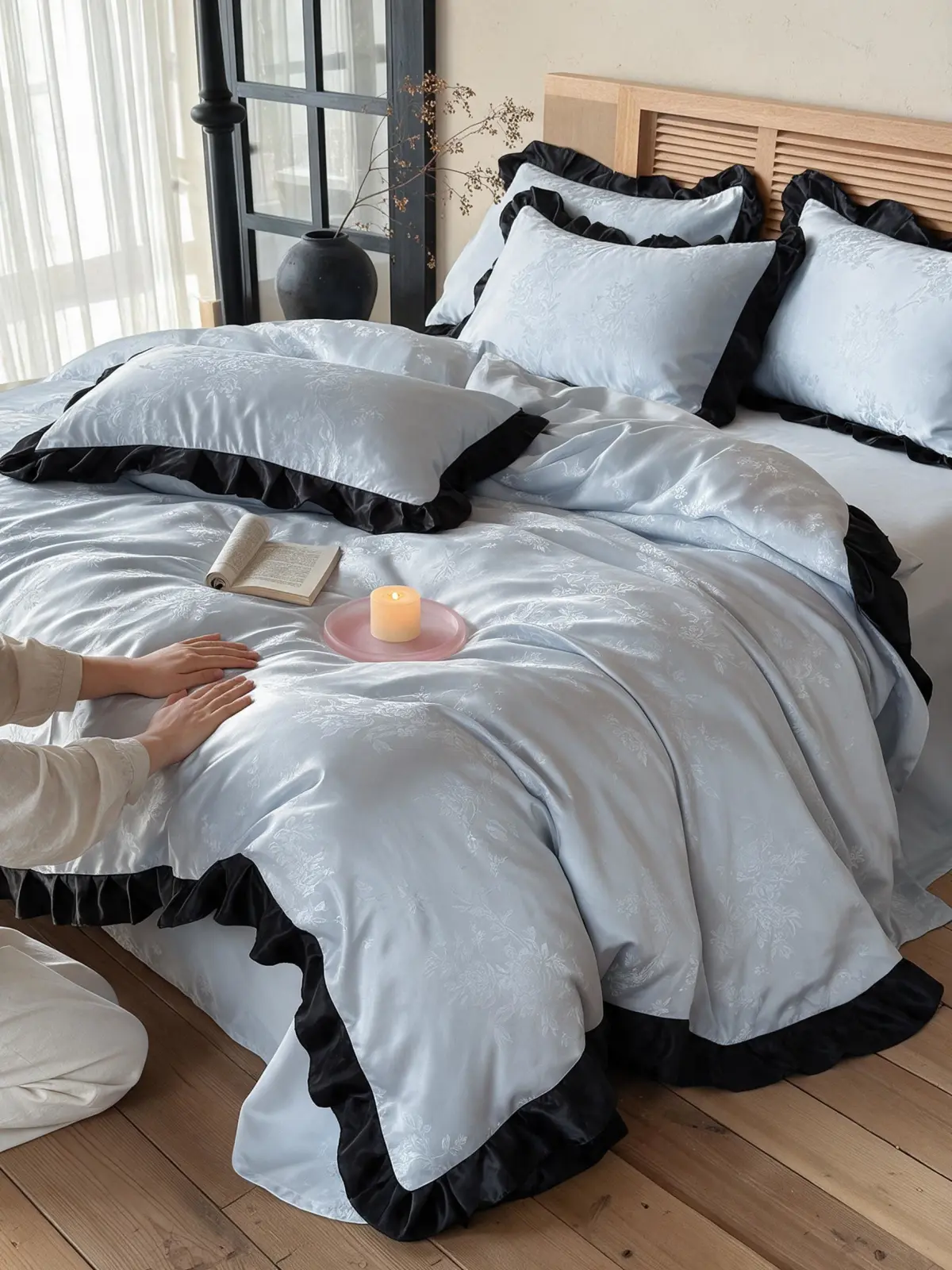
Your duvet cover or comforter is the largest block of colour in the room, so choose it first. A textured neutral — waffle, stripe, washed cotton — gives the bed visual interest without fighting the rest of your bedroom. Pull it up to the pillow line, then fold the top edge back about a hand’s width so the sheet shows underneath. That one fold is what makes a bed read as made rather than pulled up.
Layer Two: The Quilt or Coverlet
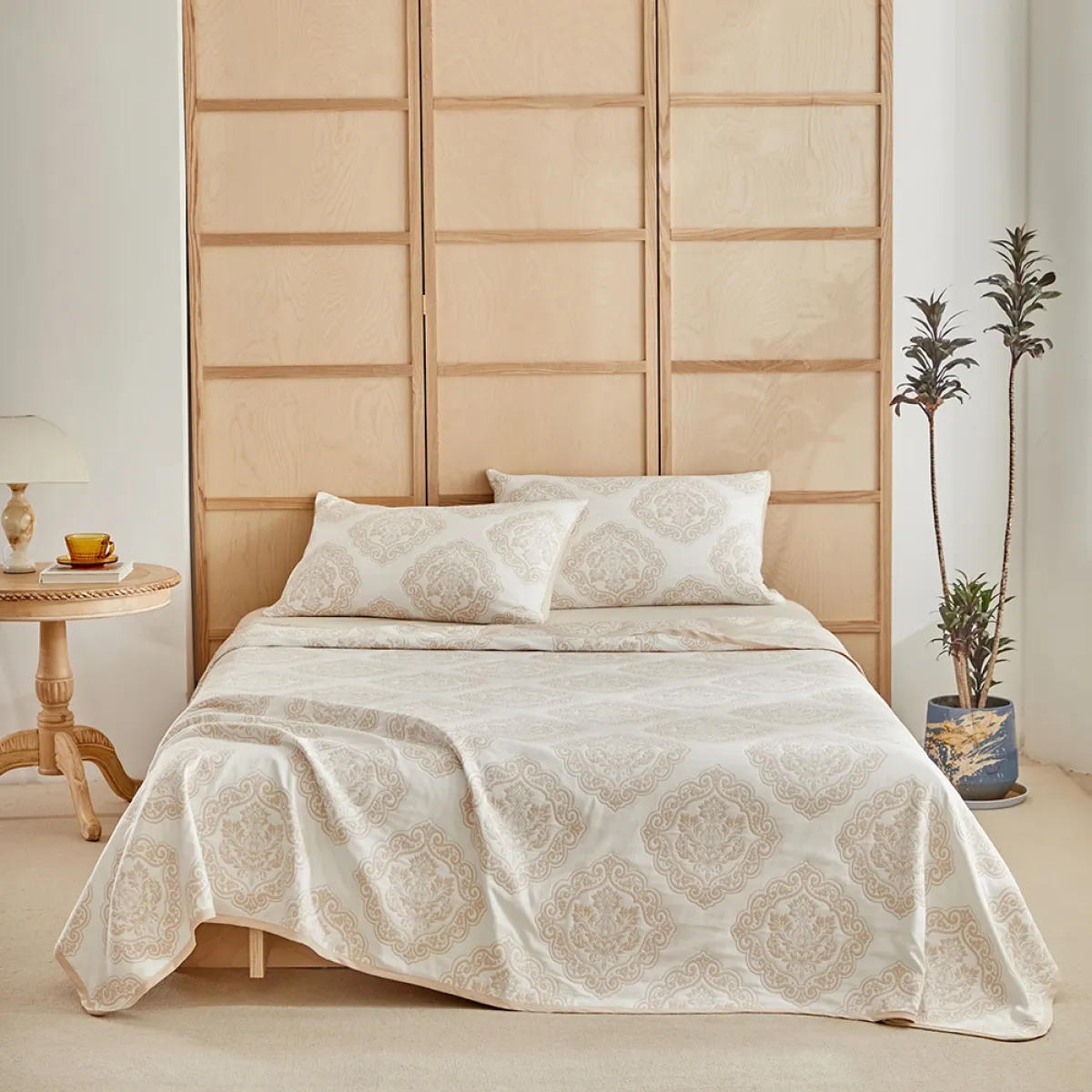
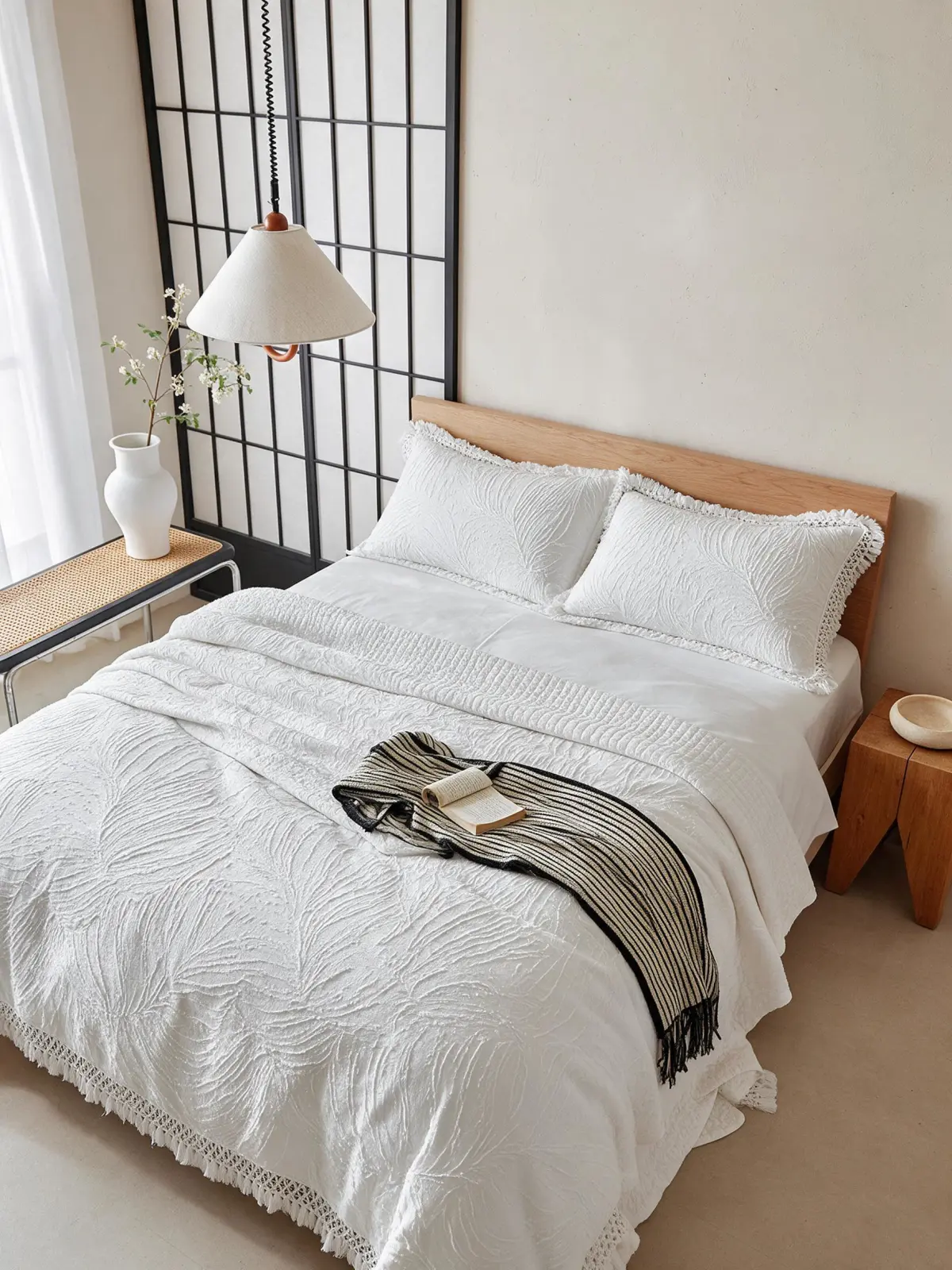
Next comes the layer that adds depth. Fold a quilt or coverlet across the lower two-thirds of the bed. This is the piece that lets you change how a room feels seasonally without buying a whole new set — lighter and crisper in summer, heavier and cozier in winter.
Layer Three: The Throw
Drape a lightweight blanket across one corner, slightly off-centre. Off-centre is the trick: a perfectly symmetrical fold looks like a shop display, while a loose diagonal reads like a real home.
Pillows: The Ratio That Works
- Two sleeping pillows per person, in plain pillowcases.
- Two square or euro pillows behind them for height.
- One accent pillow in front, in a texture rather than a print.
If the bed looks flat, the fix is usually height, not more pillows. Add one square layer and the whole arrangement lifts.
Practical Notes
- Wash new bedding before first use to soften the weave.
- Rotate two base sets so one is always clean and folded.
- Fluff duvet fills monthly — down alternative recovers quickly.
A styled bed is not a complicated bed. It is three honest layers, folded with intention.