Measure the Room Before You Look at Anything
Almost every vanity mistake is a measuring mistake. Start with three numbers: the width of the available wall, the distance from that wall to any obstruction, and the height of your existing plumbing outlets. Write them down and take them shopping with you.
Choosing a Width
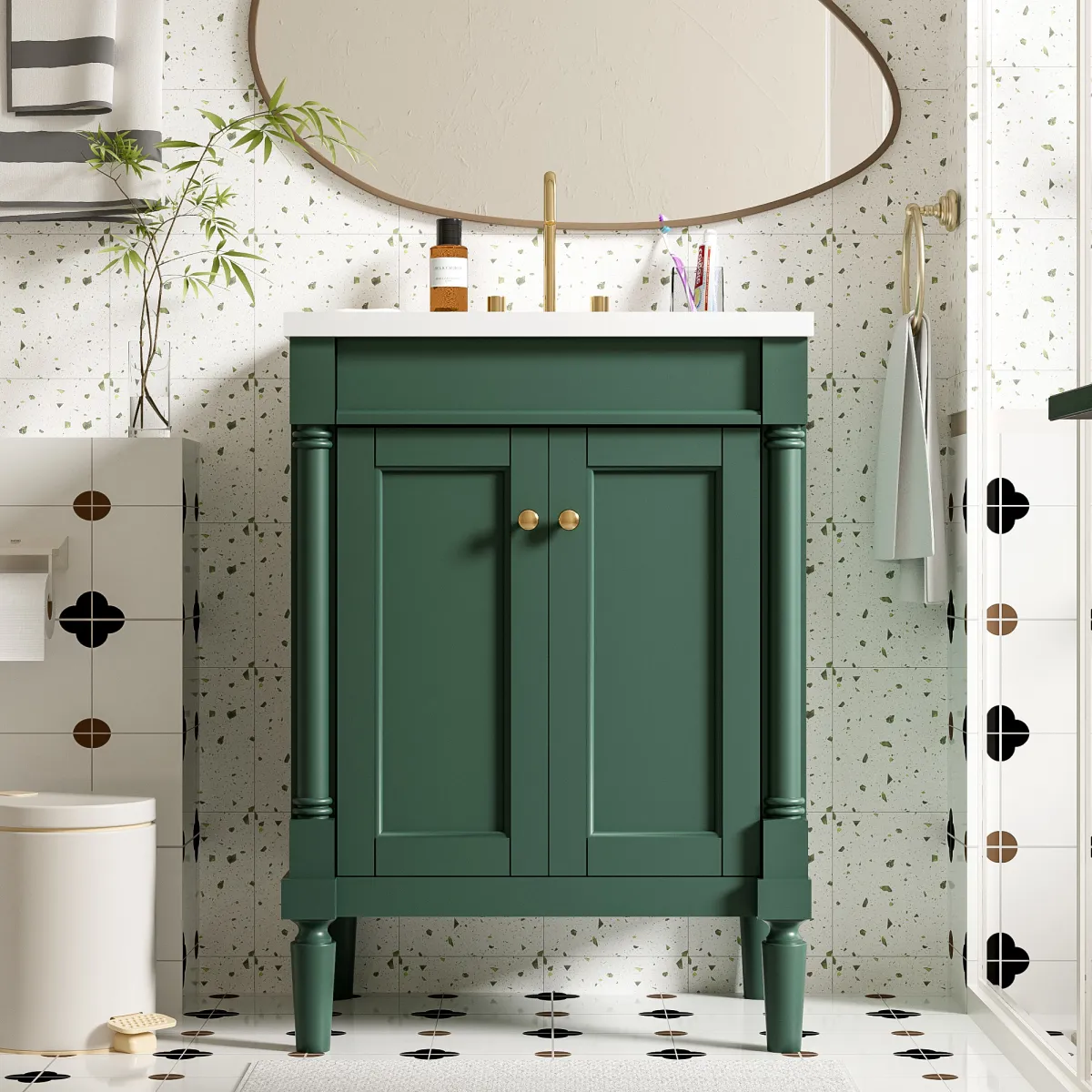
- Leave at least a few inches of breathing room on each side; a vanity that touches both walls makes a small bathroom feel tighter.
- For a double vanity, check that two people can stand side by side with the doors open.
- Depth matters too — a deeper cabinet can block the door swing in a narrow room.
Sink Type: What Actually Changes
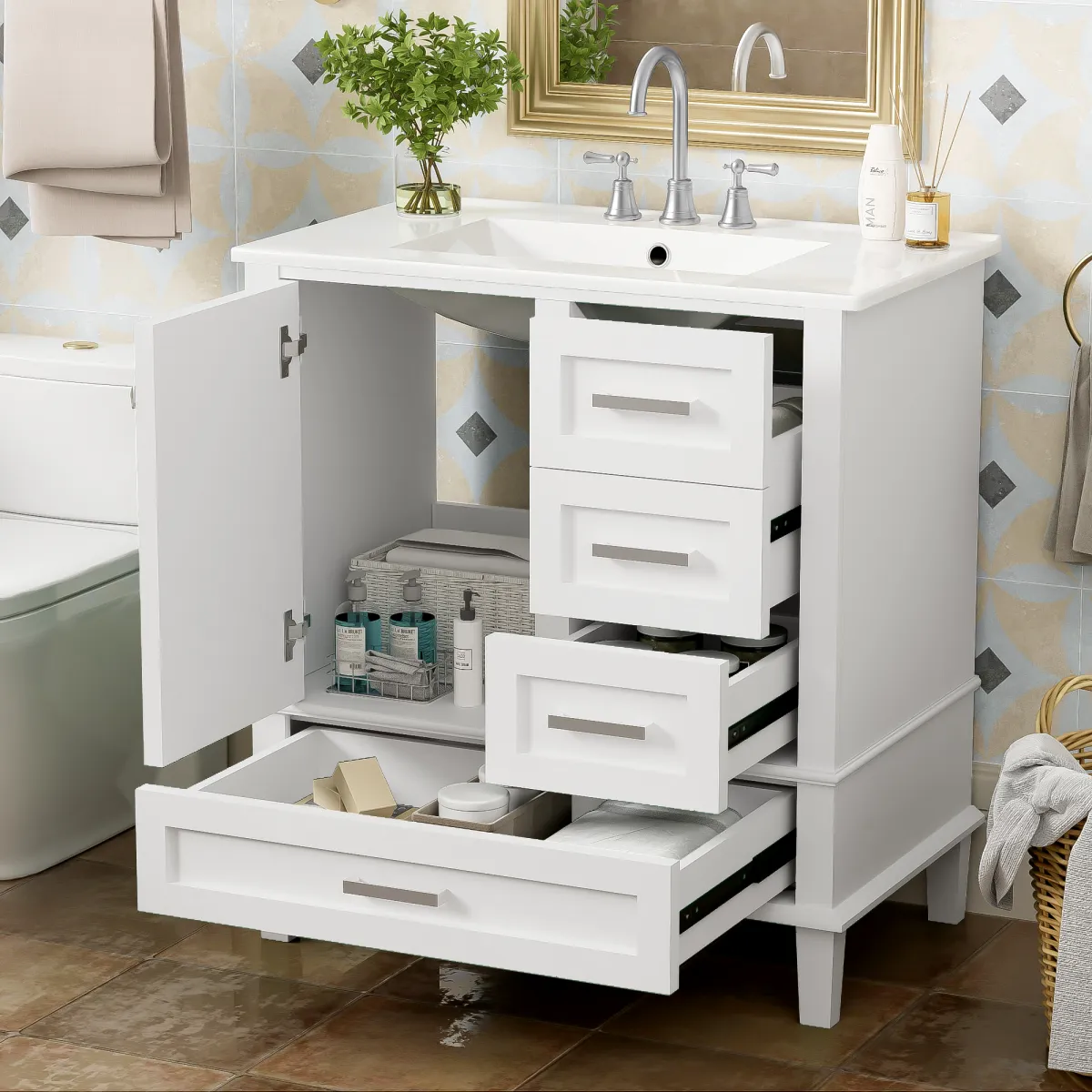
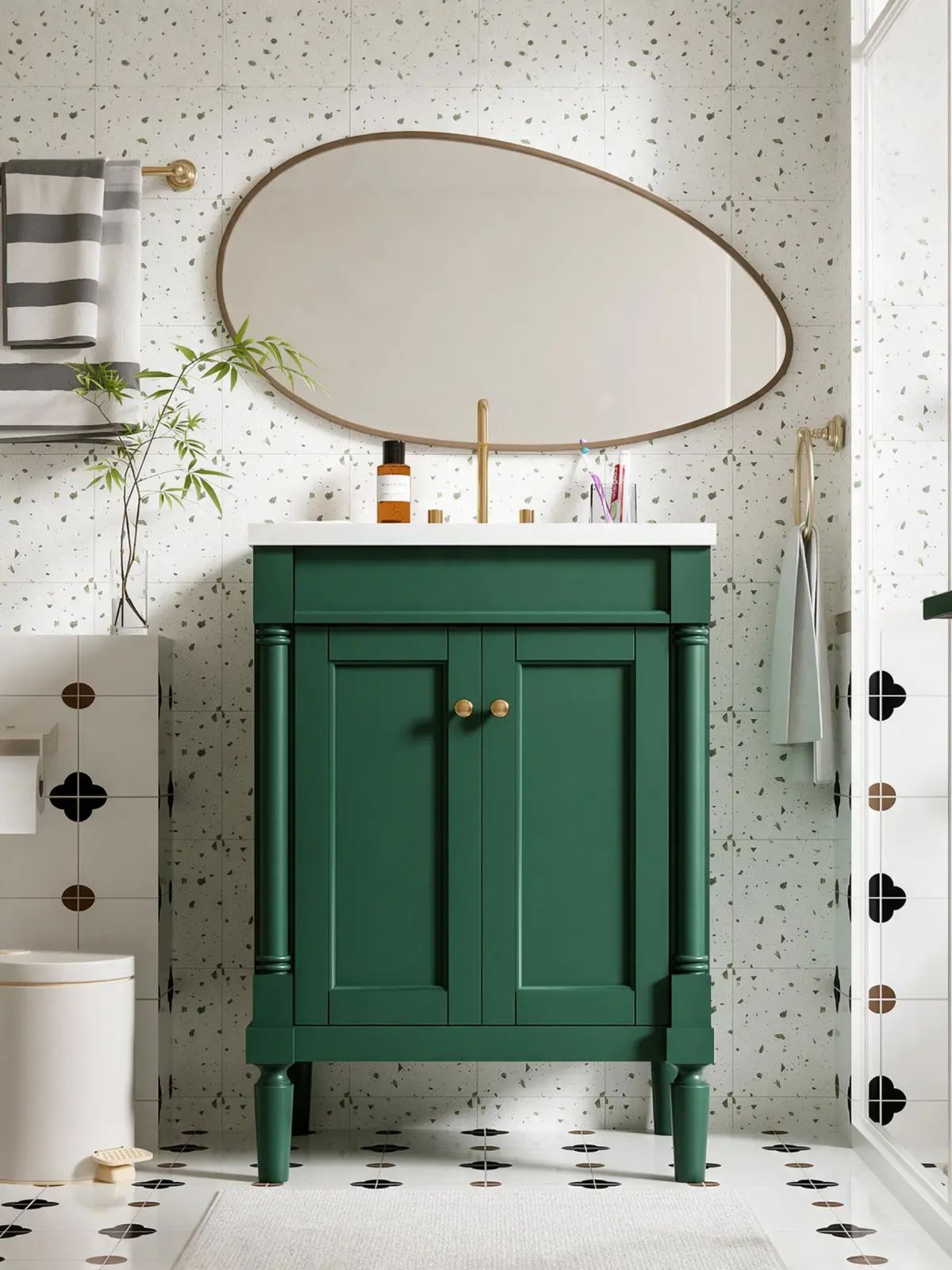
An integrated top-sink combo is the simplest option: cabinet and basin arrive as one piece, so there is less to align and fewer parts to buy. A separate vessel or undermount sink gives more choice of shape, but you will need to confirm the counter cut-out matches your basin before ordering.
Storage: Doors, Drawers or Both
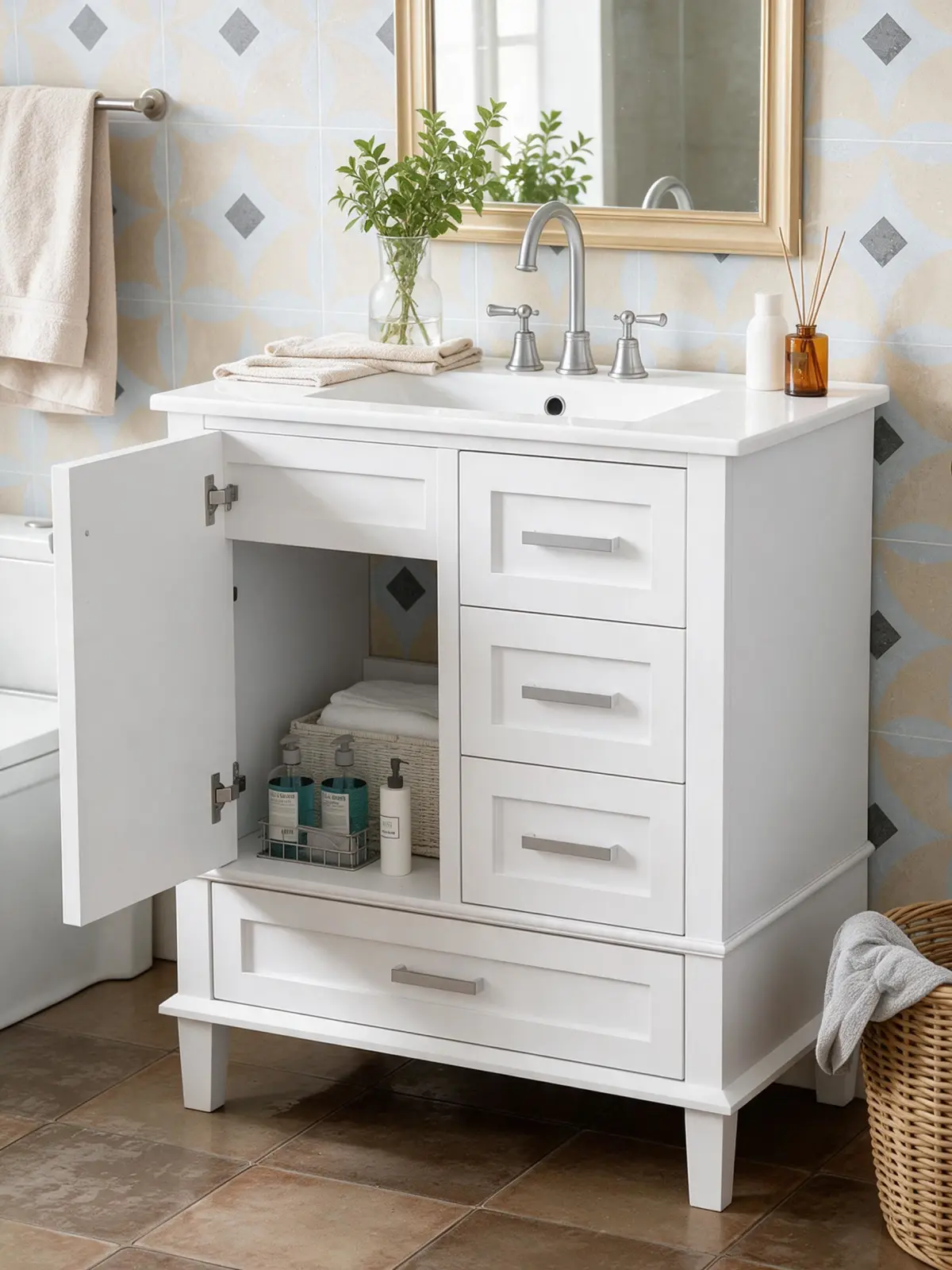
Drawers are easier to live with at counter height; doors are better for taller bottles. A two-tier layout — closed section plus open shelf — covers both without needing extra furniture. If storage is the priority, count the usable interior height rather than the cabinet height.
Do Not Forget the Faucet
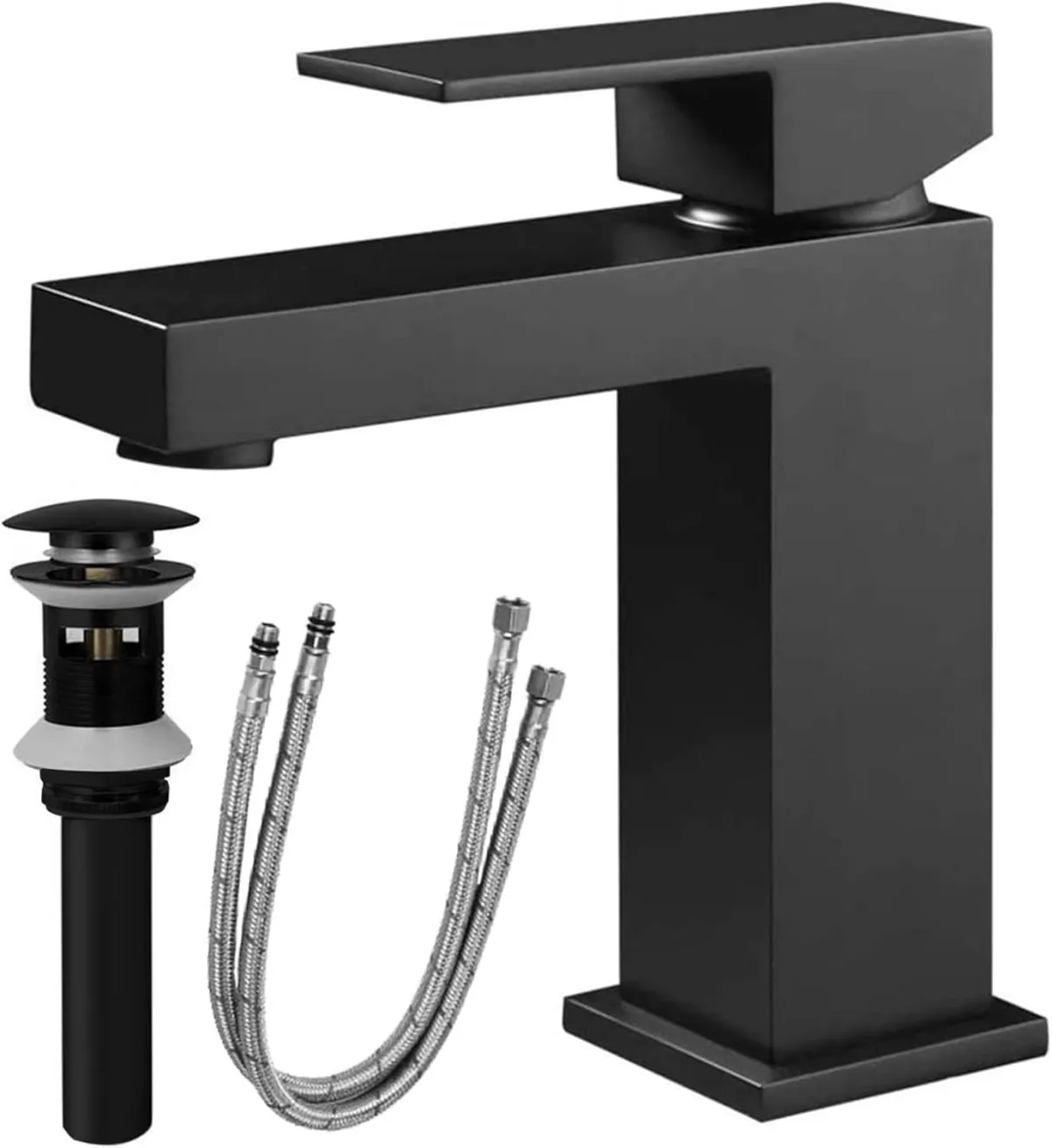
The faucet is the piece people buy last and think about least. Two things to check: how many holes the vanity top has, and whether the spout reach clears the basin rim. A single-handle faucet is easier to use with wet hands, and a wall-mounted style keeps the counter clear at the cost of a rougher install.
Installation Order
- Confirm the water shut-off valves work before removing anything.
- Test-fit the cabinet in place before attaching it.
- Seal the joints, then wait a full day before loading the drawers.
Buy the vanity that fits the room you have, not the room you are planning to renovate someday.